
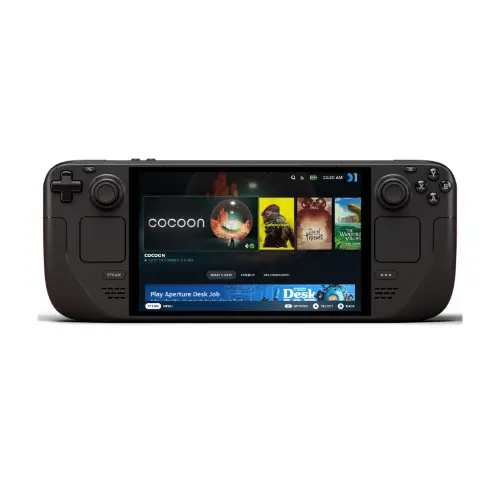
Steam Deck OLED 1TB In Kenya:
The Steam Deck OLED price in Kenya is KES 96,500. Built for serious gamers who want portable, premium performance, the Steam Deck is a heavy-duty handheld gaming PC. You can game comfortably for hours with a 7.4", HDR OLED display (1280 x 800 resolution at up to 90Hz refresh rate) with ultra-vivid colors, deep contrast, and smooth motion, all in a handheld form factor that comes in at approximately 298 × 117 × 49 mm (≈ 11.7 x 4.6 x 1.9 inches) and weights in around 640 g. With it's 6nm custom AMD APU, 16 GB of fast LPDDR5 RAM, and a 1TB NVMe SSD that's beyond fast and truly solid storage, the Steam Deck OLED is ready for serious gaming anywhere. On top of all that, you get Wi-Fi 6E and Bluetooth 5.3. Within the gaming gear are a couple of dual track pads, dual full-size analog sticks, and a microSD slot to allow for additional storage solutions. This handheld rivals your home console gaming experiences.
Steam Deck OLED Full Specifications:
| Model | Steam Deck OLED 1TB |
| Launch Date | November 16, 2023 |
| Display Type | HDR OLED, 7.4-inch diagonal |
| Resolution | 1280 × 800 pixels |
| Brightness | 1000 nits (HDR), 600 nits (SDR) |
| Refresh Rate | Up to 90Hz |
| Touchscreen | Multi-touch enabled |
| Contrast Ratio | 1,000,000:1 |
| Color Gamut | 110% P3 |
| Response Time | 0.1 ms |
| Chipset | AMD APU (6nm), Zen 2 CPU (4-core/8-thread), RDNA 2 GPU (8 CUs) |
| CPU Clock Speed | 2.4–3.5 GHz |
| GPU Clock Speed | 1.6 GHz |
| RAM | 16GB LPDDR5 (6400 MT/s) |
| Storage | 1TB NVMe SSD + microSD slot |
| Battery | 50Wh, up to 12 hours of gameplay |
| Charging | USB-C 45W PD 3.0 fast charging |
| Audio | Stereo speakers, dual microphones, 3.5mm jack, USB-C audio, Bluetooth audio |
| Wireless | Wi-Fi 5, Bluetooth 5.3 |
| Controls | ABXY buttons, D-pad, dual analog sticks, trackpads, gyro, grip buttons |
| Operating System | SteamOS 3.5 (based on Arch Linux) |
| Dimensions | 298 × 117 × 49 mm |
| Weight | 640 g |
| Color | Black with orange accents |
Detailed Feature:
Looking beyond the specifications, the Steam Deck OLED impresses with its ergonomic details and PC-level flexibility. The high-end model boasts anti-glare etched glass to combat reflections for long daytime gaming sessions. The battery's (50 Wh) combination with the OLED's energy efficieny creates great endurance, too, with users reporting anywhere from 3 to 12 hours of play time depending on use. The device runs on SteamOS 3 for seamless access to your Steam library and has the ability to dock to a monitor or TV via USB-C to present a desktop experience. Whether you want to dive into AAA titles, indie hits, or modding classics, you'll have access to high fidelity gaming in your hands, anywhere you go.
Pros and Cons:
Pros
- Incredible 7.4" HDR OLED display, featuring a maximum refresh rate of 90Hz, giving the user vibrant visuals without frame drops.
- A large 1TB NVMe SSD builds a large enough library without taking away from fast load times.
- A capable yet portable design housed in a 640 g body, giving you comfort and power.
- Plenty of connectivity with Wi-Fi 6E, Bluetooth 5.3, and USB-C docking to an external displays.
- Built-in trackpads and standard controls make it versatile for any genre.
- Operates SteamOS which gives you direct access to its entire Steam library and allows PC gaming on the go.
- Expandable storage using the microSD slot allows you to quickly increase your capacity.
Cons
- The battery life (which varies from 3 to 12 hours), is based on both the game load, and settings.
- The resolution (1280×800), isn’t as high as some dedicated handhelds so game visuals may not be as good as more powerful consoles.
- It is portable (the gaming console isn’t light or small like most handheld tablets) so it can become tiring to hold.
- Game compatibility and performance vary by Proton/SteamOS support for specific games.
- Docks to allow for full play on TV/monitor are sold separately if desired.
- High-end model has a premium price tag vs base-storage models.
- The gaming console is marketed as portable, however, longer sessions require external power, or a rest.